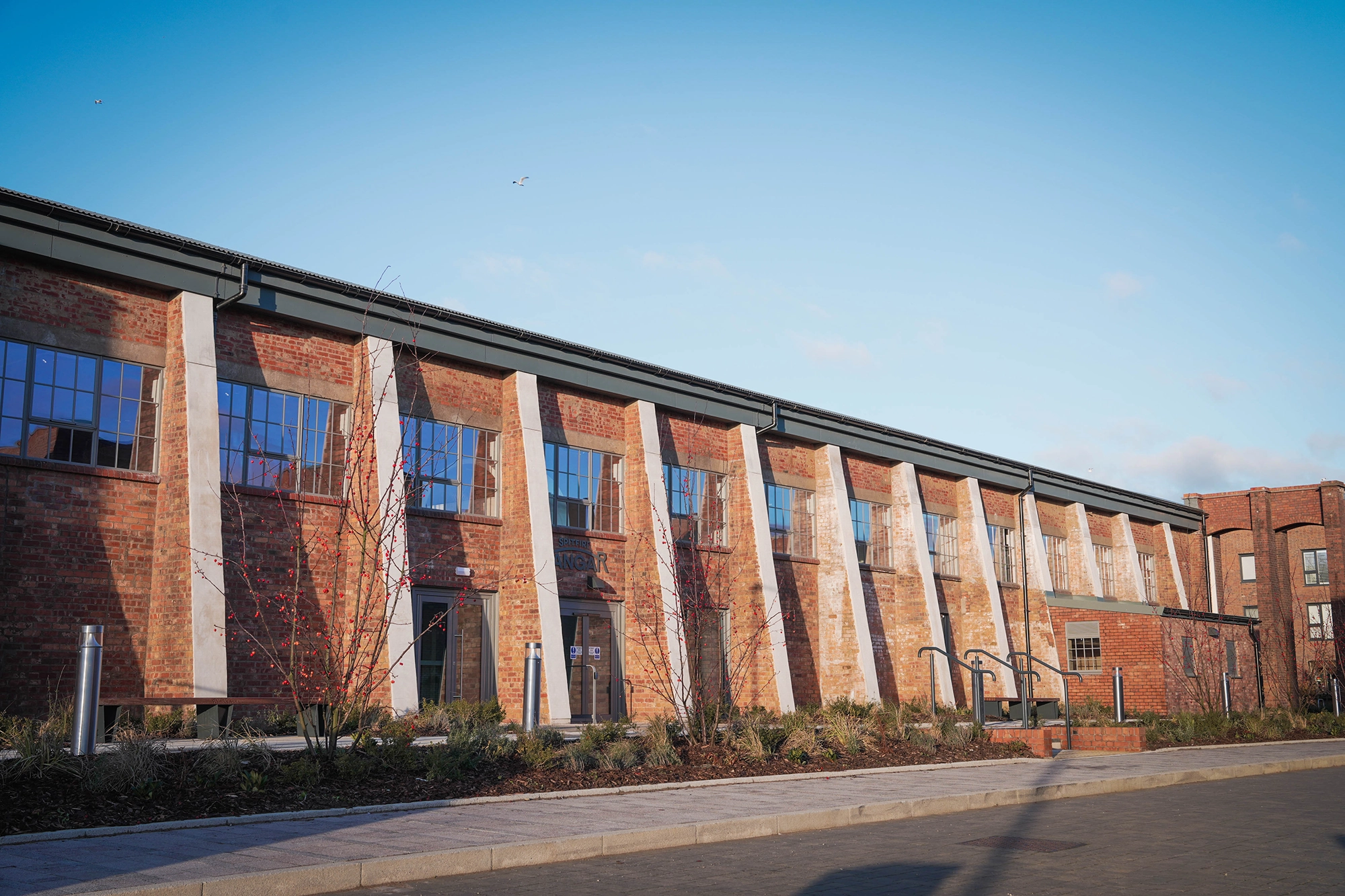
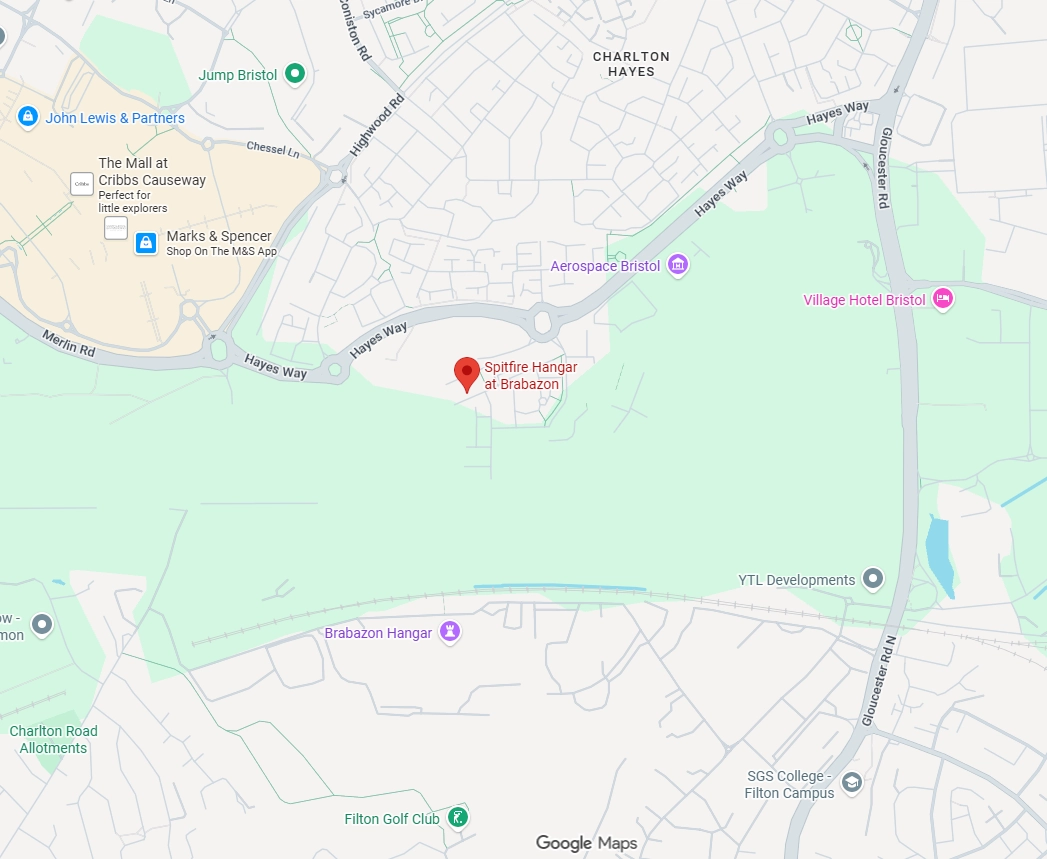
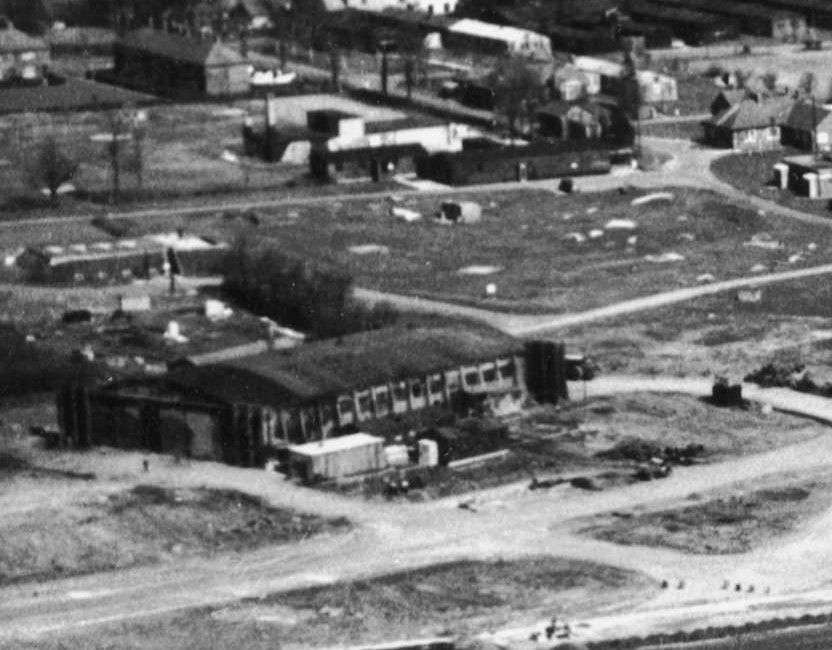
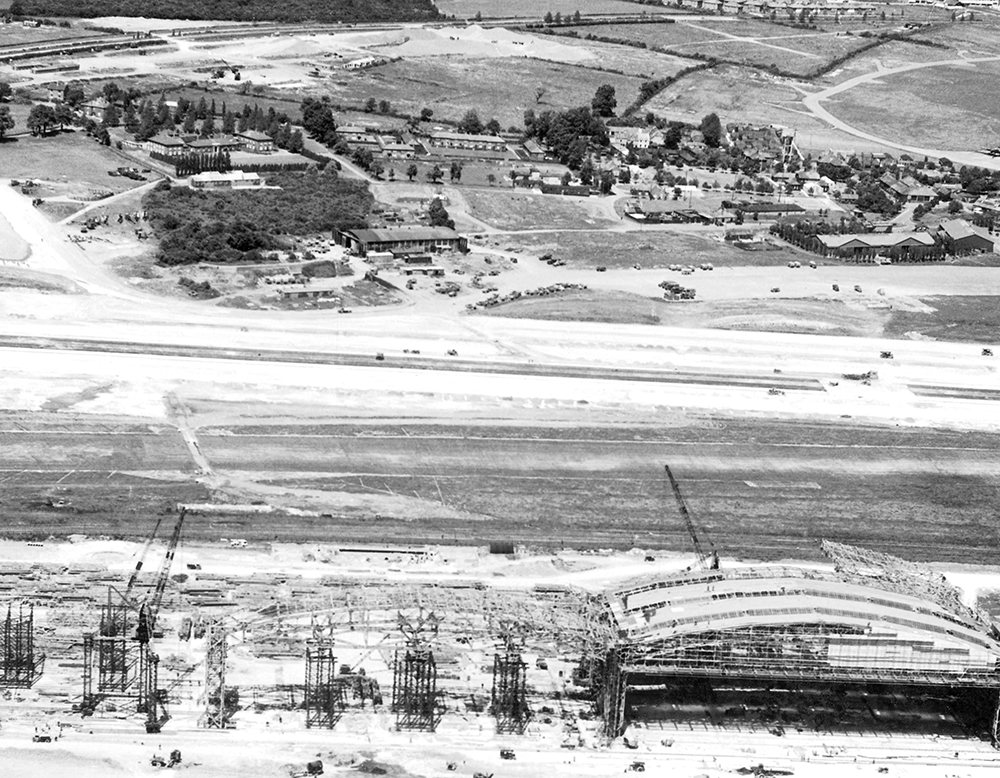
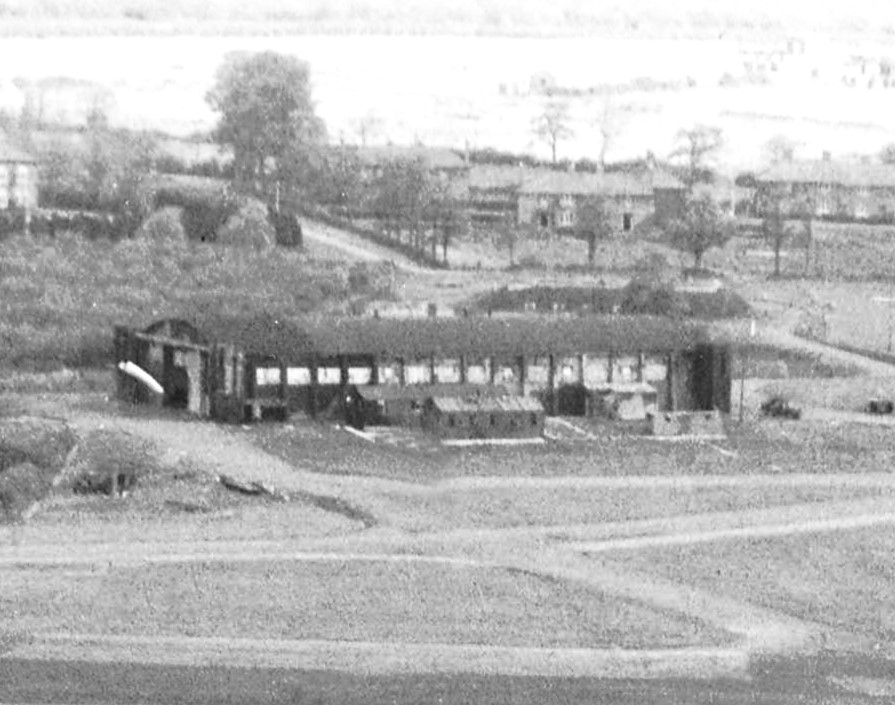
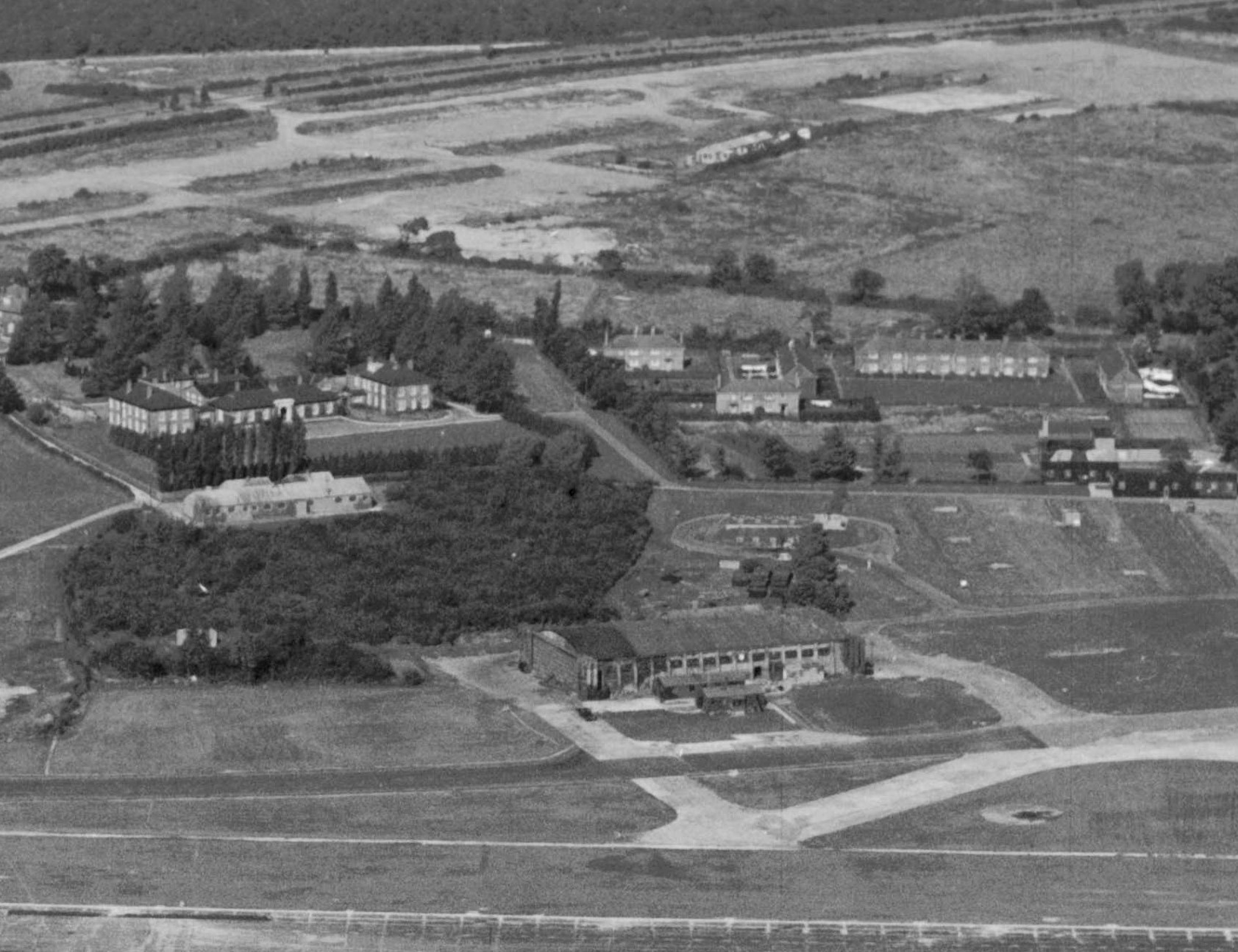
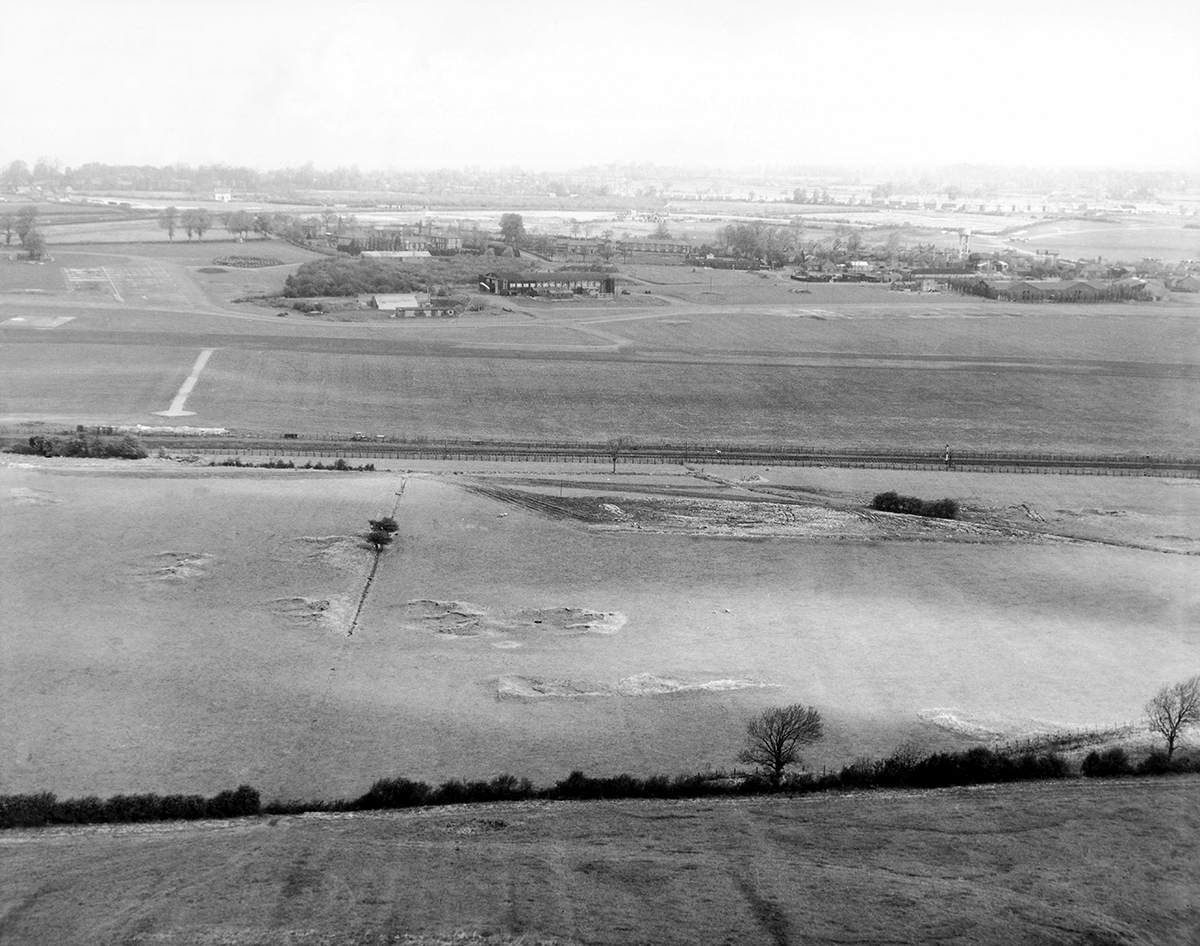
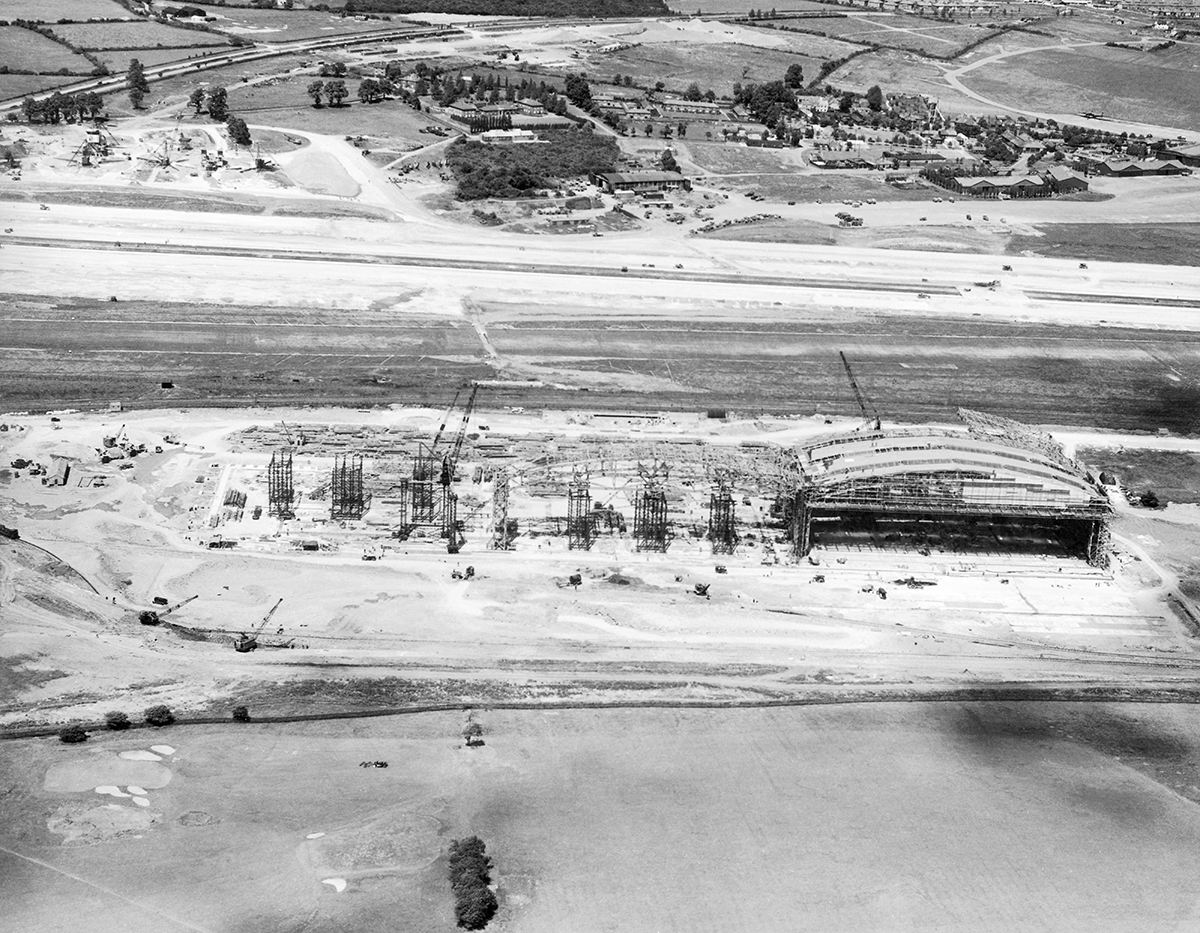
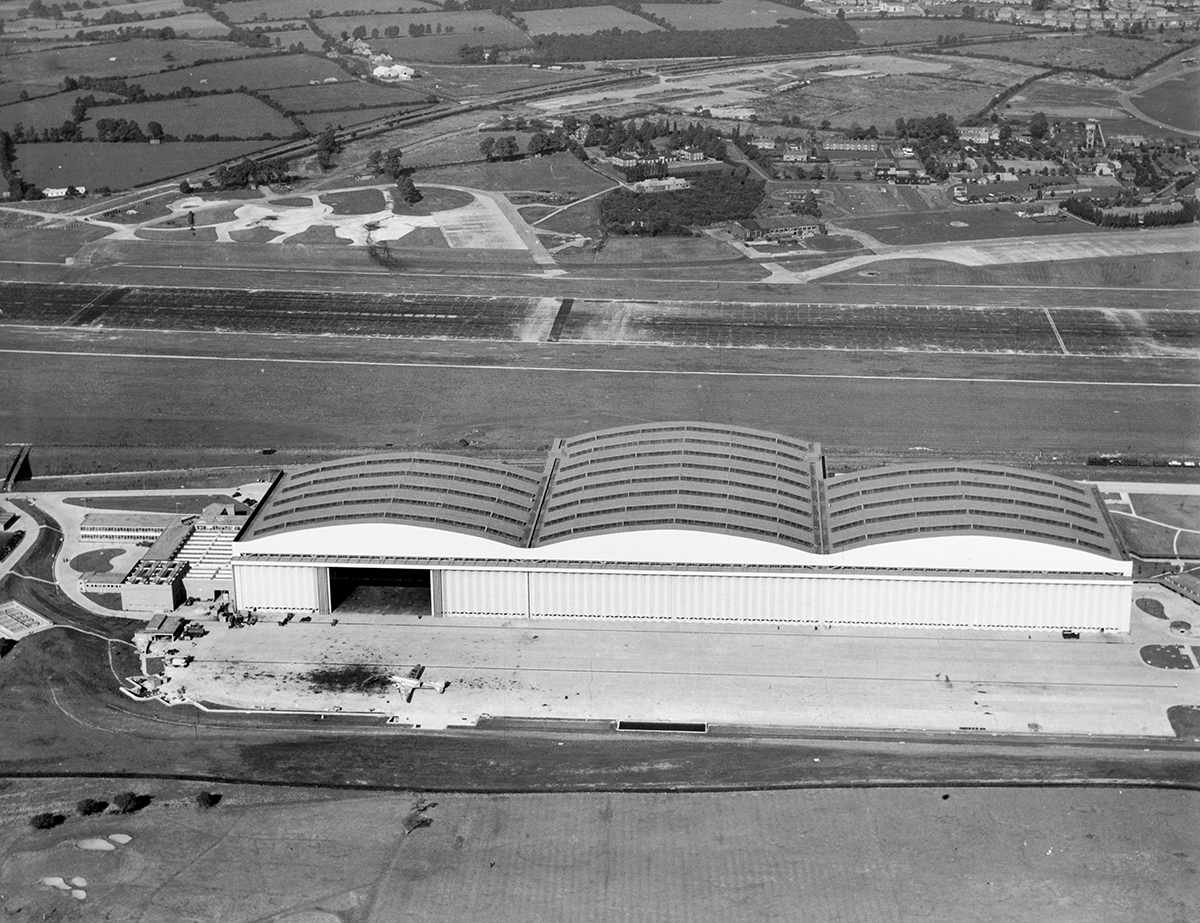
Spitfire Hangar, formally known as Hangar 16U, is a Grade II listed aircraft hangar built around 1917 for the Royal Flying Corps located at Filton Airfield, South Gloucestershire. Constructed with red and brown brick walls and a distinctive Belfast truss roof, it served as part of an Aircraft Acceptance Park for assembling and testing aircraft during the First World War. Spitfire Hangar is historically significant both locally and nationally, having played a role in both world wars and forming part of Sir George White’s pioneering Bristol Aeroplane Company site. Despite some alterations, much of its original structure remains intact, including its softwood trusses, brick piers, and workshop annexes.
Internally, 15 Belfast trusses span the space, forming 17 bays with intricate lattice bracing. The hangar’s roof structure reflects early 20th-century engineering innovation, with the Belfast truss first marketed in 1905 and widely adopted by the Royal Flying Corps from 1916. Hangar 16U remains a rare and well-preserved example of a General Service Shed and offers a tangible link to Britain’s aviation heritage.


 Accessibility
 Accessibility
 Return to Home